The beep is annoying on this radio because it is significantly louder than L/R VOL. Disable the beep by pressing [SET][ITEM5] Rotate until it reads OFF.
9/30/20
FT-8900R beep on/off

7/22/18
Vertical HF Antennas
MFJ-2286
Loading coil that covers 7-55 MHz.
Link
DIAMOND CP-725H
7 / 21/ /28 / 50 MHz Trap Vertical
Link
Loading coil that covers 7-55 MHz.
Link
DIAMOND CP-725H
7 / 21/ /28 / 50 MHz Trap Vertical
Link
7/7/18
Recent software upgrades
JTAlert: 2.10.13 to 2.12.0. The upgrade remembered all of the previous settings. Reading the release notes, it looks like Windows XP is officially dead...
WSJT-X: 1.8 to 1.9. The upgrade remembered all of the previous settings.
6/3/18
Kansas State Convention
Kansas State Convention
HAMFEST/CONVENTION
08/19/2018 Start Date: 08/19/2018
End Date: 08/19/2018
Location: Camp Webster Conference Center
2601 North Ohio Street
Salina, KS 67401
Website: http://www.w0cy.org/
Sponsor: Central Kansas Amateur Radio Club
Type: ARRL Convention
Talk-In: 147.030+ (PL 118.8)
Public Contact: John Burchill , KCØJNK
724 Highland Avenue Salina, KS 67401
Phone: 785-819-0789
Email: john@kwu.edu
http://www.arrl.org/hamfests/kansas-state-convention-7
08/19/2018 Start Date: 08/19/2018
End Date: 08/19/2018
Location: Camp Webster Conference Center
2601 North Ohio Street
Salina, KS 67401
Website: http://www.w0cy.org/
Sponsor: Central Kansas Amateur Radio Club
Type: ARRL Convention
Talk-In: 147.030+ (PL 118.8)
Public Contact: John Burchill , KCØJNK
724 Highland Avenue Salina, KS 67401
Phone: 785-819-0789
Email: john@kwu.edu
http://www.arrl.org/hamfests/kansas-state-convention-7
1/27/18
1/25/18
ARRL Letter for January 25, 2018
From the ARRL Letter for January 25, 2018 [SOURCE: ARRL]
Puerto Rico, US Virgin Island Amateurs are International Humanitarian Award WinnersThe ARRL Board of Directors has conferred the 2018 International Humanitarian Award jointly on the Amateur Radio population of Puerto Rico -- served by ARRL Section Manager Oscar Resto, KP4RF -- and the radio amateurs of the US Virgin Islands, served by ARRL Section Manager Fred Kleber, K9VV. Radio amateurs in Puerto Rico and in the US Virgin Islands aided in the relief and recovery after a punishing hurricane season in the Caribbean.The Board noted that radio amateurs in Puerto Rico and on the US Virgin Islands were "pressed into immediate service before and during the devastating storms" during the 2017 hurricane season. "The efforts of the local amateur communities continue to support the relief and recovery efforts even now," the Board said, "and the ARRL leadership in each section continues to do extraordinary service to their communities." ARRL established the International Humanitarian Award to recognize "truly outstanding Amateur Radio operators in areas of international humanitarianism and the furtherance of peace."In a separate motion, the Board recognized the outstanding work and service and commended all involved with the various hurricane relief communication efforts during 2017. The Board cited the Amateur Radio communities of Puerto Rico, US Virgin Islands, the Caribbean islands, and in south Florida and Texas for "outstanding service during the 2017 Atlantic hurricane season," calling their efforts "a demonstrable exhibition of Amateur Radio public service."

1/22/18

1/14/18
Article: Do Shortwave ‘Numbers Stations’ Really Instruct Spies?
Unidentified radio broadcasts have been transmitting coded messages, using numbers for years
(Source: Radio World)
(Source: Radio World)
1/8/18

1/7/18
Logbook of the World
After a few weeks of effort, LoTW is working for me. This is the #1 way I'm going to confirm QSOs. I also use eQSL but not as often. My dream is WAS for all of these digital modes:
- AMTOR
- CLOVER
- CONTESTI
- DOMINO
- FSK31
- FSK441
- GTOR
- HELL
- HFSK
- ISCAT
- JT4
- JT65
- JT6M
- JT9
- MFSK16
- MFSK8
- MINIRTTY
- MT63
- OLIVIA
- OPERA
- PACKET
- PACTOR
- PAX
- PSK10
- PSK125
- PSK2K
- PSK31
- PSK63
- PSK63F
- PSKAM
- PSKFEC31
- Q15
- RTTY
- RTTYM
- SSTV
- THOR
- THROB
- VOI
- WINMOR
- WSPR
1/6/18


1/1/18
I think I figured out the high ALC issue

Adjusted RF PWR to 50 watts. Turned SignaLink TX knob to slightly below the 9 o clock position. Checking the PO meter shows an output of 10 watts. FT-891 is set in Data mode (which used to be in SSB per page 65 in the advanced manual from Yaesu) and this does better. Width is set to 3000Hz. The ALC is no longer visible in the meter!
12/31/17

Visually Impaired Girl Sees World Through Ham Radio

http://www.bentoncountyenterprise.com/content/visually-impaired-girl-sees-world-through-ham-radio
12/25/17
WSJT-X, Yaesu FT-891, SignaLink

Setting the application gain on WSJT-X to 50% (per the instructions of SignaLink) brings it right back to 100% on TX. It looks like this causes a higher ALC on the 891. I'm not sure at this time how this can be reduced, but it looks like the FT8 signal is getting out there. SignaLink set at 50% for both TX and RX knobs:


High ALC? It is unfortunate there isn't any values associated with this meter.
12/24/17
New Books to Read
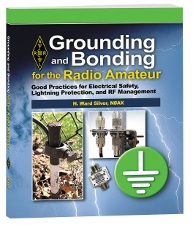
Grounding and Bonding for the Radio Amateur (H. Ward Silver, N0AX)
https://www.arrl.org/shop/Grounding-and-Bonding-for-the-Radio-Amateur/

ARRL Antenna Book (23rd Ed.)
https://www.arrl.org/shop/ARRL-Antenna-Book-23rd-Softcover-Edition/

Propagation and Radio Science: Exploring the Magic of Wireless Communication
http://www.arrl.org/shop/Propagation-and-Radio-Science
11/23/17
SKYWARN Recognition Day is on December 2, 2017

11/12/17
PSK31 contacts
I was able to make a dozen or so contacts with PSK31 from all across the USA this weekend. It was a lot of fun!
11/11/17
Setting up FT-891, SignaLink USB, and FLDIGI
I'm still figuring this out. I can decode the PSK31 signals, but doesn't seem like I am able to TX correctly.

Default: Speakers Realtek High Definition Audio

Default: Microphone Realtek High Definition Audio

Line in setting: 0 dB

Fldigi setting for capture/playback. The SignaLink USB is selected for both (USB Audio Codec).

Can see PSK31.
Responding to a CQ (or sending one myself) has not received any response. I don't think I have the ALC setup correctly or the TX/RX volume setup correctly.
Physical
Connections
The radio cable is connected to the RJ-45 at the back of the
SignaLink, and the other end of the cable is connected to the FT-891
through the DATA connection. A USB cable is connected to the laptop
and the SignaLink. The external speaker is plugged into the rear of
the FT-891.
FT-891 Menu
Settings
08-01 MODE DAT: DATA MODE PSK
08-02 MODE DAT: PSK TONE 1000Hz
08-09 MODE DAT: DATA IN SELECT REAR
08-12 MODE DAT: DATA BFO USB
16-03 TX GNRL: HF PWR 20
16-10 TX GNRL: DATA MIC GAIN 50
16-14 TX GNRL: DATA DATA GAIN 50
Function 1
WDH 3Khz
Windows 10 Settings

Default: Speakers Realtek High Definition Audio

Default: Microphone Realtek High Definition Audio

Line in setting: 0 dB

Fldigi setting for capture/playback. The SignaLink USB is selected for both (USB Audio Codec).

Can see PSK31.
Responding to a CQ (or sending one myself) has not received any response. I don't think I have the ALC setup correctly or the TX/RX volume setup correctly.
11/4/17
Installing the SLMOD6PM module into the SignaLink USB SLUSB6PM
For the Yaesu FT-891. It wasn't terribly difficult after reading the instructions! Just make sure you're wearing an anti-static wrist band.


Today is Dipole Day
I'm going to the 20 meter dipole antenna in the tree this morning. The apex will be 35' and will form an inverted V.
10/29/17
FT-891 and the SignaLink USB
6-pin Mini DIN Data Port Connector

Module
This is the correct model needed.

Tigertronics SignaLink Radio Interface Cables SL-CAB6PM
DX Engineering
6-pin Mini DIN Data Port Connector

Module
This is the correct model needed.

Tigertronics SignaLink Radio Interface Cables SL-CAB6PM
DX Engineering
10/27/17

10/26/17
Yaesu FT-891 has been ordered!
After a long time figuring out what I should order, I finally picked the FT-891 and ordered it. I also ordered two dipoles from Radiowavez, the 40 meter and the 20 meter. Not sure what antenna tuner I'll choose, but I'm thinking about going with the LDG Z-100 Plus. I'm very excited!
 Almost everything you need right here!

Almost everything you need right here!
From my QTH the radio will be powered by a Yaesu FP-1030A power supply. Ordering an antenna tuner and a SignaLink USB soon.
10/15/17
No ATU required for most bands

This looks like a good option for someone not wanting to spend money on an ATU. ZS6BKW Multi-band Antenna. More information about the antenna here.
10/4/17
Ham radio operators coming to rescue for Puerto Rico
Radio provides a critical lifeline to tens of thousands of people affected by the hurricane in Puerto Rico. The first video is a news story from WTNH News8 about radio operators helping in the recovery effort. The second video is in Spanish.
9/1/17

7/21/17
Rpi3

RPi3
- Quad Core 1.2GHz Broadcom BCM2837 64bit CPU
- 1GB RAM
- BCM43438 wireless LAN and Bluetooth Low Energy (BLE) on board
- 40-pin extended GPIO
- 4 USB 2 ports
- 4 Pole stereo output and composite video port
- Full size HDMI

7/15/17
General notes about grounding
There are four types of grounds in ham radio [1]:
(1) Safety
-
All grounds to be bonded together per the National Electrical Code (website).
-
Use the electrical safety ground (green-wire ground) for overcurrent protection.
-
“The conductive case of equipment is required to be connected to the bonding system, which is also connected to earth ground at the service entrance, so someone who is connected to “earth” (for example, standing in bare feet on a conductive floor) that touches the case won’t get shocked”.
(2) Antenna
-
Create a common reference point potential.
-
Minimizes RF current flowing between equipment.
-
Must be bonded to safety ground!
(3) Chassis
-
Difficult to achieve equipment bond to an RF (antenna) ground because the wire will have a higher impedance as its length is increased.
-
The chassis of equipment should be connected so that no RF current is carried between them at all.
(4) Lightning
-
Low inductance and resistance are required.
-
Must be able to handle 20-30 kA.
When it comes to lightning protection, I think it is easier to disconnect all radio equipment from AC and also disconnect the antenna feedline when not in use. The topic of lightning protection is very complex and further research is needed (see ARRL Handbook 2014/2015 sections 28.7 Lightning Dissipation Ground, 28.1.10 Antenna Discharge Units, and 28.1.11 Lightning/Transient Protection; The ARRL General Class License Manual for Ham Radio Chapter 9 Electrical and RF Safety).
Update
The primary purpose in lightening protection is to reduce the risk of fire and damage to radio equipment and “the best protection is to disconnect all cables outside the house and unplug equipment power cords inside the home before a storm [2]”.
That is easy to do. I’ve seen many products that claim to offer lightening protection but I’m not so sure these work as well compared to disconnecting feedlines and power cables. An example of such a product:

I’m not convinced that a lightning strike is going to be diverted with this device. Still, this has me thinking that it isn’t enough to simply disconnect the feedline to the radio. Where should the feedline go after that? If it is left in the house it could start a fire if a lightning strike were to hit the antenna system. All that electricity and energy has nowhere to go except the end of the feedline and into whatever else is in the way. Clearly the ideal solution is to disconnect the entire feedline from both the antenna and the radio, as the ARRL General License manual mentions. Would it be possible to simply disconnect the radio feedline, and then plug it into something that goes back outside to ground? Here is what I’m thinking: The feedline to the radio is disconnected and then connected to another piece of coax that is sent some distance out of the house, to a ground rod.
Some make the argument that a station ground is not necessary. W8JI doesn’t use an RF ground except in certain circumstances [3]. Club station KF6GDJ writes that RF grounds are needed at the HF frequencies but not VHF/UHF [4]. Something interesting to note on the last link is that there is a hypothetical ham radio operator using the second story of his home to operate from. From there he has a low resistance braid coming down to earth ground connected to a ground rod. The problem with this is that the ground connection is “not short and direct as possible”. At some 33 ft, this grounding wire may actually affect other wiring in and around the house. So what is the solution? According to the article the operator should have his station placed on the ground floor. Yes, that is obvious but what do amateur radio operators do when they live in apartments or condos?
Sources
[1] Lux, Jim. “Chapter 28 Safety” In The ARRL Handbook for Radio Communications: The Comprehensive RF Engineering Reference 2015, edited by H. Ward Silver, 28.6. 92nd ed.
[2] Silver, W. (2015). The ARRL General Class License Manual for Ham Radio (8th ed.). CT: American Radio Relay League.
[3] http://www.w8ji.com/rfi_rf_grounding.htm
[4] http://www.ve3sqb.com/hamaerials/kf6gdj/


Subscribe to:
Posts (Atom)